As an Amazon Associate, we earn from qualifying purchases. Some links on this site are affiliate links at no extra cost to you. Our recommendations are based on thorough research and editorial judgment.

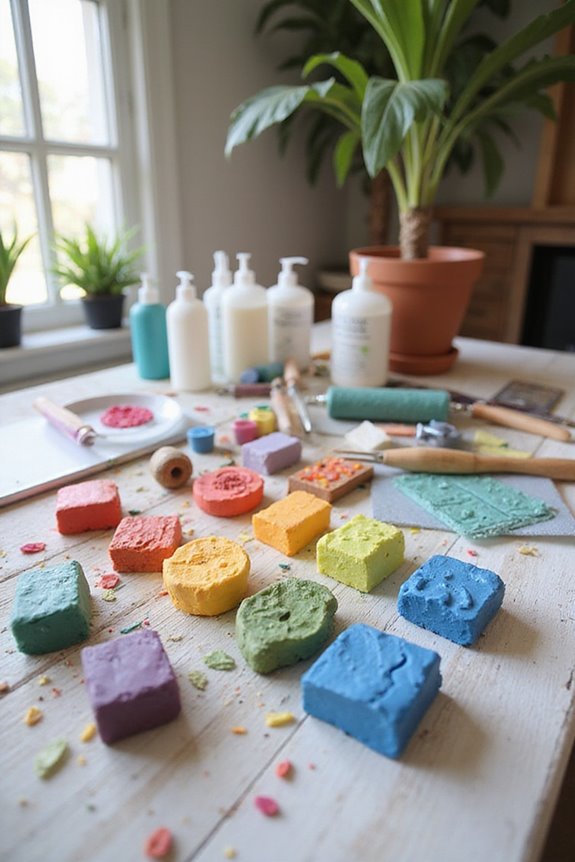
How To Choose Polymer Clay For Beginners

When choosing polymer clay as a beginner, I recommend starting with softer clays like Sculpey III. They’re easy to manipulate and great for blending. For more durability, consider flexible clays like CosClay. Keep in mind, a good baking temperature is around 120-130°C (248-266°F); bake for 30 minutes per 6mm thickness. Don’t forget to explore color mixing for personalized shades! 🌈 If you stick with me, you’ll uncover more essential tips for your unique projects.
Key Takeaways
- Start with soft clays like Sculpey III for easy manipulation, ideal for beginners learning the basics of sculpting.
- Opt for versatile brands like Sculpey Premo and Fimo Professional that offer a wide range of colors and good detail retention.
- Consider flexible clays like CosClay for projects requiring durability, such as toys or accessories that need to withstand bending.
- Always check for non-toxic materials to ensure a safe crafting experience, especially if children are involved.
- Follow baking guidelines carefully, maintaining an oven temperature of 120-130°C to achieve proper curing and prevent cracking.
Understanding Different Types of Polymer Clay
When you’re starting with polymer clay, you might wonder which type is best for your projects. It’s essential to understand the different types of polymer clay available since each has unique project suitability.
- Flexible Clays like CosClay and Prism & Pro are fantastic for toys, offering durability and bendability.
- Firm Clays, such as Kato and Sculpey Premo, excel in detail work, perfect for advanced techniques like caning.
- Soft Clays like Sculpey III are beginner-friendly and easier to work with, while Lightweight Clays like Sculpey Souffle are ideal for jewelry.
Additionally, it’s important to consider safety standards to ensure a safe crafting experience, especially for younger users. Choosing the right polymer clay will depend on your project’s needs, so consider flexibility, firmness, and ease of use before diving in!
Recommended Products
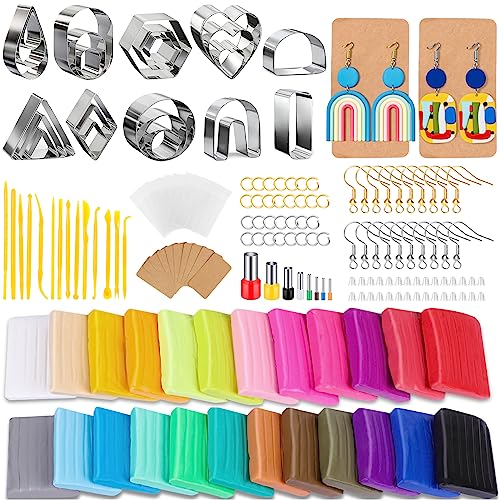
32-Piece Metal Clay Cutter Set: Our set includes 32 precision-engineered clay cutters in a variety of shapes like circles, ovals, squares, and more. Crafted from high-quality steel with smooth, thickened edges for added safety, it includes a dedicated earring hole cutter and carving tools, enabling easy creation of detailed designs


Evaluating Clay Consistency and Usability
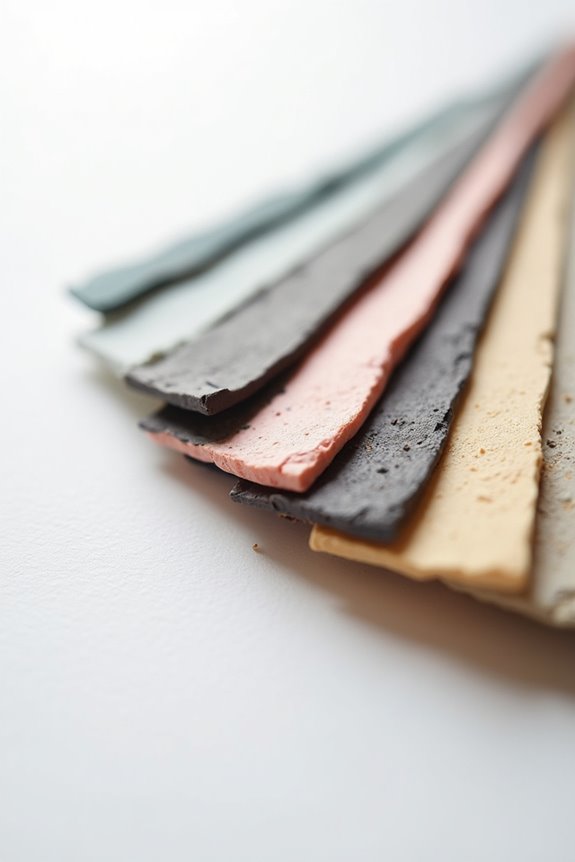
Evaluating polymer clay consistency and usability can make a significant difference in your crafting experience. When choosing clay, consider a consistency evaluation to determine its suitability for your projects.
- Soft Clays: Great for blending, but can be too sticky and distort shapes.
- Firm Clays: Better for detailed work; they maintain shape more easily.
A moderate firmness is ideal for beginners, balancing ease of shaping with control. Make sure to condition the clay well by kneading it until it resembles cheddar cheese—firm yet pliable. Additionally, consider opting for non-toxic materials to ensure a safe crafting environment, especially for children.
Recommended Products

STAYS SOFT UNTIL BAKED: Does not air dry. Remains soft and flexible until it is baked in your home oven - No kiln needed. Store extra clay to use later.

All You Need Included: You will get 480pcs polymer clay beads charms in 24 different styles, and all the clay beads are packed in a plastic gift box, the beaded set is also equipped with two rolls of 5m crystal elastic strings and a pair of exquisite scissors, which can meet all your needs for DIY jewelry production!

Sculpey III comes in 44 vibrant colors! This color is Leaf Green, which is perfect for all types of clay projects!
Exploring Color Variety and Finishing Options

Exploring the vibrant world of polymer clay colors can be both exciting and a bit overwhelming. To start, choosing color combinations can really set the tone for your projects. Brands like Sculpey and Fimo offer unique shades, from bold to metallic. Don’t forget, mixing primary colors lets you create custom hues. 📏 Measure carefully for consistency!
When it comes to finish effects, consider what suits your style. Many clays bake to a matte finish, while others might have a satin or glossy sheen. You can also achieve translucent or metallic looks using liquid polymer clays. 🎨 Additionally, it’s beneficial to choose non-toxic materials that comply with safety standards for a worry-free crafting experience. Experiment with different combinations and finishes to make your creations truly yours! Happy crafting!
Recommended Products


ADVANCED TECHNIQUE CRAFTING: Sculpey Premo is flexible, very strong & durable making it the perfect choice for advanced techniques like caning, mokumegane & mica shift.

Provides a smooth seal to cover imperfections, improve durability and set your clay.
Key Baking and Curing Considerations
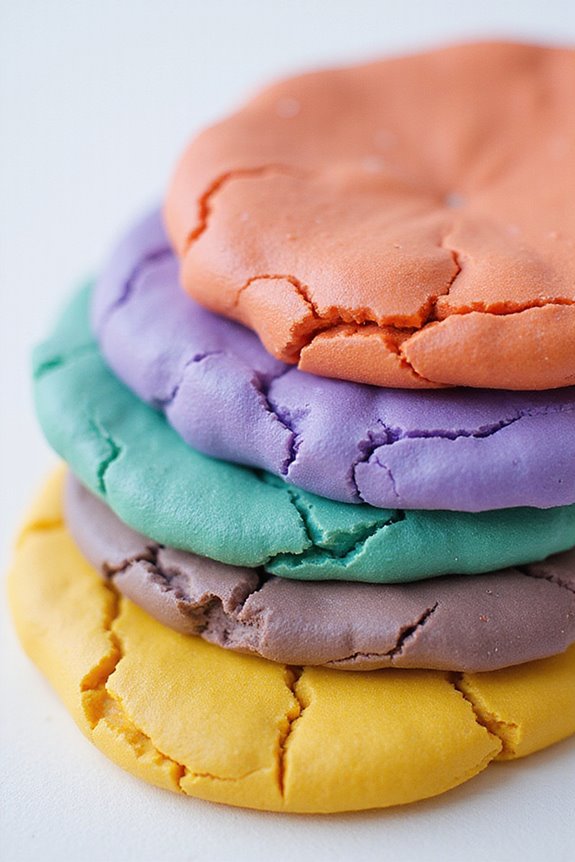
- Keep your oven around 120-130°C (248-266°F) for accurate curing.
- Always verify this with an external oven thermometer to avoid disasters.
- Generally, bake for 30 minutes per 6mm thickness, with a minimum baking time of 15 minutes.
Avoid opening the oven, as it disrupts heat. Let your project cool gradually in the oven to prevent cracks. Remember, handling your clay while it’s warm can lead to breakage. Following proper curing techniques will enhance the durability of your creations, helping you achieve stunning pieces that last!
Recommended Products
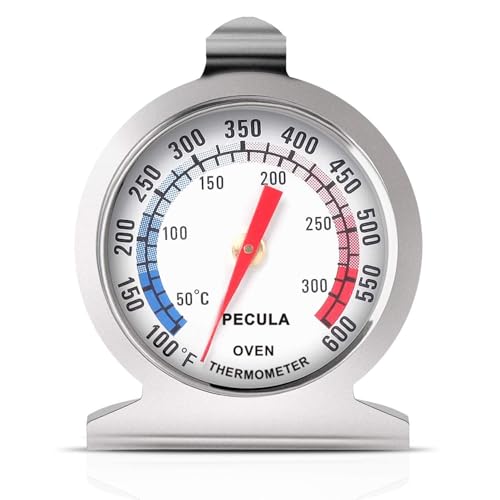
Clear Dial Display: PECULA's analog oven thermometer delivers precise, instant readings from 50–300°C / 100–600°F. Its dial features clear dual-zone blue and red indicators for at-a-glance temperature monitoring—perfect for ovens, grills, smokers, and deep fryers, ensuring you master every bake, roast, or fry.

Oven and grill safe for leave-in use while cooking

Meet your all-in-one solution for polymer clay artistry: This complete kit features a portable and safe oven with a heat-resistant shell, scald-proof handles, and easy knob temperature control. It comes with two heat-resistant gloves, an accurate oven thermometer, two non-stick silicone mats, a diamond-pattern baking grid for flatter results, and a sturdy tray to prevent slips—everything you need to bake multiple pieces perfectly and safely every time
Assessing Durability and Flexibility After Baking
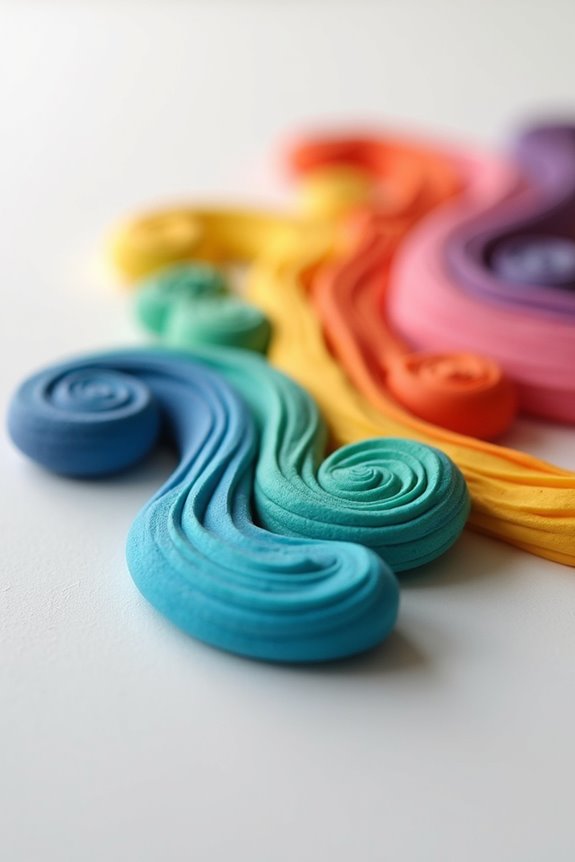
When you finish baking your polymer clay creations, it’s important to evaluate their durability and flexibility. Start by checking for curing signs; your clay should not be brittle and must bend without snapping.
🔍 Here’s how to perform flexibility tests:
- Gently bend or twist your piece. If it holds up, you’ve got a winner!
- For thicker pieces, make sure they are sturdy but not overly rigid. Additionally, using a polymer clay baking mat during the process can significantly enhance the final results by providing a stable surface for even baking.
Recommended Brands for Beginners
Have you ever wondered which polymer clay brands are best for beginners? I’d recommend starting with these popular brands to enhance your crafting experience:
- Sculpey Premo: Versatile and holds details well, plus it comes in a wide range of colors! 🎨
- Fimo Professional: Offers firmer consistency, making it great for detailed projects.
- Kato Polyclay: Known for durability; warm it before sculpting for easier handling.
- Sculpey Original: Perfect for absolute beginners, especially for simple projects.
- Super Sculpey: Ideal for figurines, offering good control for those ready to take a step up.
Remember to condition your clay and check freshness for quality. Happy crafting! 🏺✨
Recommended Products

Used Book in Good Condition

Super Clay Set: 32 packs, 32 different colors. 0.35 oz (10g) per block — 11.29 oz (320g) total

Choosing the Right Clay for Kids
Here are some tips:
- Choose non-toxic options: Look for clays that are labeled non-toxic and safe for children.
- Air-dry clay: This is generally a safer alternative, as it avoids the risks of heating.
- Supervise closely: Keep an eye on younger kids during crafting to guarantee they don’t ingest any material.
Maximizing safety helps guarantee creative fun! 🎨
Balancing Softness and Firmness in Clay
For best results, consider using a moderately soft clay like Sculpey Souffle, which balances pliability and strength. Start with trial packs to find the perfect consistency for your creative needs! 🖌✨
Techniques for Mixing Colors and Experimenting
What if you could open up a world of colorful possibilities with just a few simple techniques? Let’s explore mixing colors using basic color theory. Start with primary colors—red, yellow, and blue. By blending equal parts, you get secondary colors: orange, green, and purple.
🔹 Mixing Techniques:
- Use a pasta machine for consistency.
- Record your color ratios: for example, 5 parts blue to 2 parts yellow.
🔹 Experimenting:
- Add small amounts of black or white for custom shades.
- Test color combinations on scrap clay first.
These blending techniques help create dynamic, personal palettes. Trust me, keeping it organized leads to amazing results! Happy mixing! 🎨
Tips for Successful Polymer Clay Projects
After mastering color mixing, the next step is crafting successful polymer clay projects. First, focus on workspace organization. Use a smooth surface like ceramic tiles to prevent texture transfer. Keeping your area clean reduces dust contamination. For tool selection, gather a rolling pin, stamps, and a clay conditioning machine to help ease your process.
Also, condition your clay by warming it, ensuring it’s soft and easy to mold. Remember to avoid mixing different clay types and always test its flexibility first.
When baking, follow the manufacturer’s temperature for ideal curing—an independent thermometer helps, too. Finally, store unused clay in airtight bags to keep it fresh. With these tips, you’ll be well on your way to success! 🛠✨
Can I Combine Different Brands of Polymer Clay?
Absolutely, I love combining different polymer clay brands! Their brand compatibility lets me blend unique clay characteristics. Just remember to condition them well and test small batches for the best results in my projects.
What Tools Do I Need to Start With Polymer Clay?
When I started with polymer clay, I found essential supplies like acrylic rollers, craft knives, and clay cutters invaluable. These beginner tools made my projects easier and more enjoyable as I learned the art of sculpting.
How Do I Store Unused Polymer Clay?
When it comes to storing unused polymer clay, I’ve found that proper polymer storage is key for clay preservation. I wrap my clay tightly and keep it in a cool, dry place, away from heat sources.
Can Polymer Clay Be Recycled or Reused?
Absolutely, I love using recycling techniques with polymer clay! Clay repurposing is easy; I always save scraps, mix them, and create new colors. It’s a sustainable way to extend my crafting journey with minimal waste.
What Safety Precautions Should I Take While Using Polymer Clay?
When it comes to safety, I always tread carefully. Following safety guidelines and using non-toxic materials is essential. I wear goggles, avoid sharing tools, and guarantee proper ventilation to keep my workspace safe and pleasant.