As an Amazon Associate, we earn from qualifying purchases. Some links on this site are affiliate links at no extra cost to you. Our recommendations are based on thorough research and editorial judgment.


What Are The Best Wire Types For Jewelry Making

When we’re choosing the best wire types for jewelry making, consider a few key factors. 🤔 Gold and silver wires offer elegance, but remember that silver tarnishes easily. We should look at wire hardness too: dead soft is flexible, half-hard strikes a balance, while full-hard maintains shape. 🎨 For gauges, use finer wires (26g-32g) for delicate work and heavier wires (14g-18g) for strength. Each decision impacts our designs, so we’ve got much more to explore! 🛠
Key Takeaways
- Gold wire is luxury-grade and tarnish-resistant, making it an excellent choice for high-end jewelry.
- Sterling Silver is strong but requires upkeep due to its susceptibility to tarnishing.
- Fine Silver is ideal for intricate work since it has minimal oxidation and offers great detail.
- Copper is budget-friendly but oxidizes quickly, turning green, which can limit its use in jewelry.
- Consider wire gauge; fine wire suits delicate projects while heavier gauges are perfect for structural designs.
Types of Metal Wire for Jewelry Making
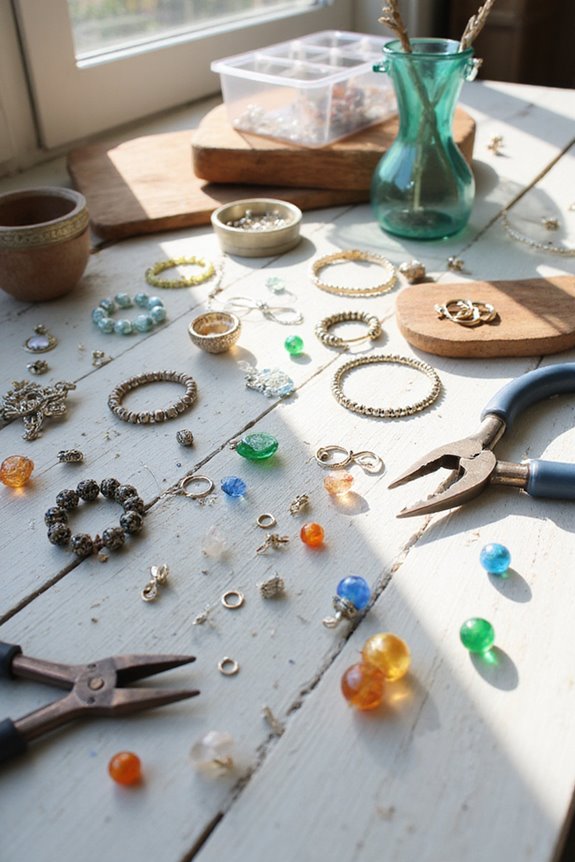
When it comes to jewelry making, choosing the right wire is essential for both aesthetics and functionality. 🛠 We’ve got various metal wire types to take into account, each with its unique properties and uses.
Gold wire has some excellent advantages, like a luxurious look and resistance to tarnishing, so your pieces maintain their shine over time. However, it’s generally softer, making it less durable under stress.
On the other hand, while silver wire is a classic choice and more affordable, its disadvantages include tarnishing, which requires regular polishing.
Consider the type of jewelry you want to create, along with your budget and skill level. Remember, the right wire can make all the difference in your projects! Additionally, the gauge thickness of the wire affects design suitability and strength, influencing your overall creations.
Recommended Products

Including necessary tool: you will get 2 rolls of 20 gauge wire for jewelry making in different colors, which can match different styles, and 1 pair of jewelry pliers for easy crafting, ideal for jewelry crafts making; Such set is ideal for beginners on designing and creating

PACKAGE INCLUDED: Paxcoo jewelry wire set includes 3 rolls of 18 Gauge tarnish resistant craft wire in different colors. They are easy to use and work with different types of beads, necklace, bracelet and other Jewelry DIY projects

Package include: the jewelry wire for jewelry making set comes with 3 rolls of 18 gauge craft wire (25 m/ 82 feet), proper size of thin wire for crafts(1 mm) to meet your different crafting needs. Useful pliers and ring sizer will be offered together
Wire Hardness and Flexibility Categories
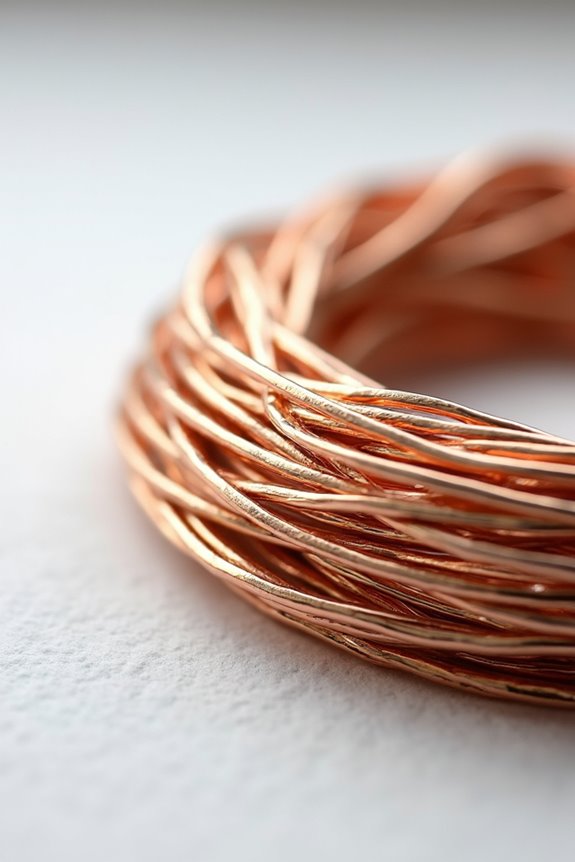
Choosing the right wire hardness for your jewelry projects is crucial, especially since it affects both the design and durability of your pieces. There are three main categories of wire hardness:
- Dead Soft: Very flexible and easy to manipulate, ideal for beginners and intricate designs.
- Half-Hard: A balance of strength and flexibility, great for clasps and ear wires.
- Full-Hard: Least flexible, it holds shape well and is perfect for sturdy components.
Understanding wire hardness effects is important, as work hardening through various wire manipulation techniques can change softness to strength. Remember, consistently shaping dead soft wire can make it half-hard. Additionally, choosing the correct wire gauge is essential for achieving the desired results in your jewelry-making projects. This knowledge helps guarantee your creations are both beautiful and durable. 💡 Happy crafting!
Recommended Products

【Certified 99.9% Pure Copper Wire with COA & Polishing Cloth】This ultra-fine copper wire is certified 99.9% pure and comes with a COA & polishing cloth. It’s uncoated, nickel-free, skin-safe, and develops a beautiful natural patina.

【Premium Copper Material】Made of high-quality copper, this jewelry wire is dead soft, highly flexible, and resistant to breakage, making it perfect for intricate jewelry designs and repeated bending without hardening.
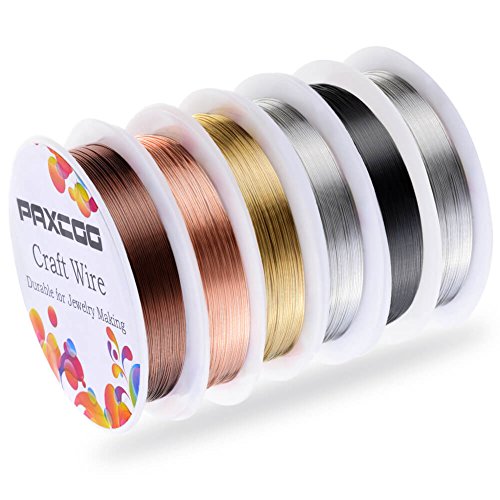
WHAT YOU GET?: Paxcoo jewelry wire set includes 6 rolls of different color copper wire. They are easy to use and works with different types of beads, necklace and bracelet designs
Wire Gauges and Their Uses

Understanding wire gauges is essential for any jewelry maker, as they directly impact your design choices and the overall stability of your creations.
- Fine wire applications, like 26g to 32g, are perfect for delicate details and intricate beadwork. These thinner wires add elegance, but we must handle them carefully to avoid kinks.
- For medium wire versatility, gauges like 20g to 24g work well for more robust designs, balancing strength and flexibility.
When you’re choosing, remember: heavier gauges (14g-18g) serve structural roles, while medium and fine gauges offer decorative options. Additionally, choosing tarnish-resistant copper wire can enhance the longevity and quality of your jewelry designs.
– Tip: Match the wire gauge to your bead hole sizes for the best results.
Recommended Products

Premium 304 Stainless Steel Wire: Made of high-quality 304 stainless steel, this jewelry wire is strong, durable, smooth, rust-resistant, corrosion-resistant, and built to last for all your jewelry making projects.

1. Premium 304 Stainless Steel Wire: Made of high-quality 304 stainless steel wire for jewelry making, this wire is strong, durable, smooth-surfaced, corrosion-resistant, acid and alkali resistant, and moisture-proof, ensuring it won’t easily rust during long-term use

🔶 【All-in-One Crafting Powerhouse】 Jumpstart projects instantly! Kit includes 65FT shimmering 18-gauge silver wire + professional 4-in-1 pliers. No more last-minute store runs! (Note: Protective oil on pliers prevents rust - wipe with dry cloth. Secure wire ends when unwinding to prevent tangling.)
Metal Specific Characteristics

As we explore the metal specific characteristics of wire types for jewelry making, it’s essential to recognize how each metal behaves differently.
- Sterling Silver: 92.5% silver makes it structurally strong but prone to wire oxidation effects like fire scale during soldering, needing pickling.
- Gold-Filled: With a durable brass core, it’s less flexible and requires careful handling to avoid exposing that core.
- Fine Silver: Comprising 99.9% silver, it’s perfect for intricate designs with limited oxidation issues.
- Copper: While malleable and economical, it oxidizes easily, turning green, which can be desirable in some designs.
- Aluminium and Nickel: Both are lightweight and cost-effective, but they don’t offer the same durability or luster as precious metals.
Understanding these metal wire properties helps us make informed choices! 🛠 Additionally, incorporating 304 stainless steel into your projects can provide excellent corrosion resistance and durability for long-lasting jewelry pieces.
Wire Shapes for Jewelry Making
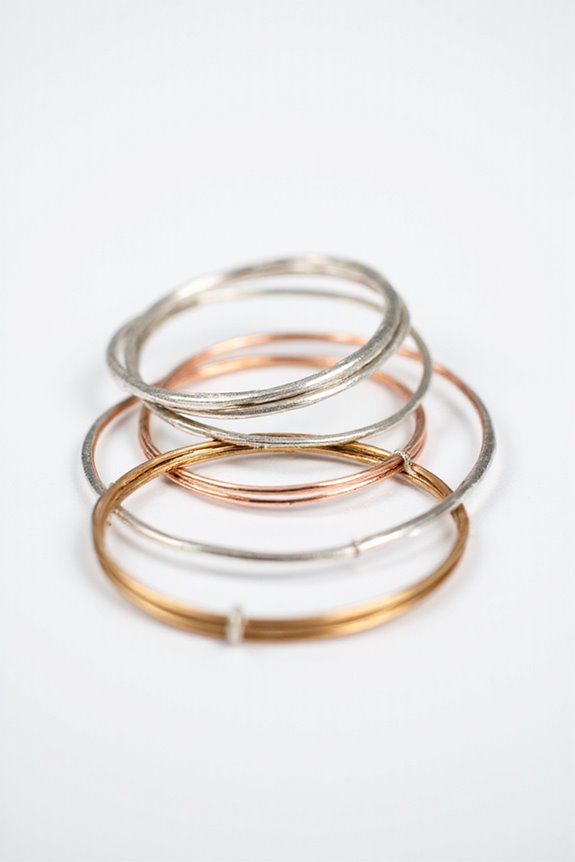
When we explore wire shapes for jewelry making, it’s important to recognize how each shape can enhance the design and functionality of our pieces.
- Round Wire: This is our go-to option, offering versatility with its consistent thickness, ideal for loops and coils.
- Half-Round Wire: It balances flat and rounded surfaces, perfect for designs that need stability against the skin.
- Square Wire: This shape creates a contemporary look, ideal for angular designs due to its rigid structure.
- Twisted Square Wire: It adds decorative texture while retaining strength, great for accenting our pieces.
- Specialty Shapes: Custom forms like swirls or coils can create unique components, allowing for creativity in our designs.
Each wire shape has unique characteristics for various design applications. Additionally, using stainless steel jump rings can significantly enhance the durability and aesthetic appeal of your jewelry pieces.
Factors Affecting Wire Choice in Jewelry Making
Choosing the right wire for our jewelry projects isn’t just about aesthetics; it also involves several important factors that can influence our final designs. Here are some key aspects we should consider:
- Material Composition: Gold offers elegance but can be costly. Silver’s classic look tarnishes, while copper’s affordability is great for beginners.
- Wire Hardness: Softer wire is easier to manipulate but may not hold shape well. We should choose the hardness based on our project’s requirements.
- Wire Gauge: A thicker gauge means strength, but less flexibility. Fine gauges are perfect for delicate pieces.
- Environmental Impact: Always consider wire sourcing, opting for eco-friendly materials whenever possible. 🌍 This helps reduce our ecological footprint while creating beautiful jewelry.
Recommended Products

Jewelry Wire:Professionally crafted from high-quality tarnish-resistant copper, this 26 gauge wire (0.4mm) is perfect for jewelry making, beading, and crafts. Ideal for necklaces, bracelets, ear wires, and pendants

CONVENIENT SPOOL PACKAGE:Anezus jewelry wire is packaged with a sturdy spool which is convenient to take the metal craft wire out and keep them organized without messy

Tips for Selecting the Right Wire for Your Project
How do we make the best choice when selecting the right wire for our jewelry projects? Let’s consider a few tips to guide us!
- Start with beginner materials such as copper or plated wire to make learning easier.
- Use wire testing with small lengths to verify the wire suits our design before committing to larger quantities.
- Match wire gauge: 22-28 gauge is great for delicate pieces, while 16-18 gauge works for sturdy components.
- Choose hardness based on our project; dead soft is pliable while half-hard offers more shape retention.
- Keep in mind tarnish resistance based on the metals we select, especially if the jewelry will see everyday wear.
Following these tips guarantees we pick the best wire for our needs! 🛠✨
Recommended Products

【Certified 99.9% Pure Copper Wire with COA & Polishing Cloth】This ultra-fine copper wire is certified 99.9% pure and comes with a COA & polishing cloth. It’s uncoated, nickel-free, skin-safe, and develops a beautiful natural patina.

【Certified 99.9% Pure Copper Wire with COA & Polishing Cloth】This ultra-fine copper wire is certified 99.9% pure and comes with a COA & polishing cloth. It’s uncoated, nickel-free, skin-safe, and develops a beautiful natural patina.

Available as Individual Spools - Multiple Gauges & Lengths:These 99.9% pure solid bare copper wires are available for purchase as individual spools in practical gauges: 18 AWG (1.0mm), 20 AWG (0.8mm), 22 AWG (0.6mm), 24 AWG, 26 AWG, and 28 AWG. The pure copper material ensures excellent conductivity and ductility. Choose the specific gauge and length that perfectly suits your project needs from the available options.
What Tools Are Essential for Working With Different Wire Types?
When working with various wire types, we need essential tools like wire cutters and different pliers types. Each tool helps us manipulate, cut, and finish our designs, ensuring everything comes together smoothly and beautifully.
How Do I Properly Store Wire to Prevent Damage?
When we think of wire as delicate flowers, proper wire storage solutions become essential to preserve their beauty. Utilizing smart wire organization tips, like labeled bags and safe containers, guarantees our wires remain tangle-free and pristine.
Can I Mix Different Wire Types in One Project?
Yes, we can mix different wire types in one project! By considering wire compatibility and project aesthetics, we enhance our designs with unique textures and colors, just remember to account for each wire’s properties while crafting.
What Techniques Help Prevent Wire Tarnishing During Use?
We’ve discovered that effective tarnish prevention during use includes applying protective coatings like wax and sealants. By maintaining proper handling and storage, we can greatly extend our wire jewelry’s shine and beauty.
How Do I Determine the Right Thickness for Bead Holes?
To determine the right thickness for bead holes, we need to match the bead size with the appropriate wire gauge. Typically, 24 to 26 gauge works well for smaller holes, ensuring smooth stringing and durability.