As an Amazon Associate, we earn from qualifying purchases. Some links on this site are affiliate links at no extra cost to you. Our recommendations are based on thorough research and editorial judgment.

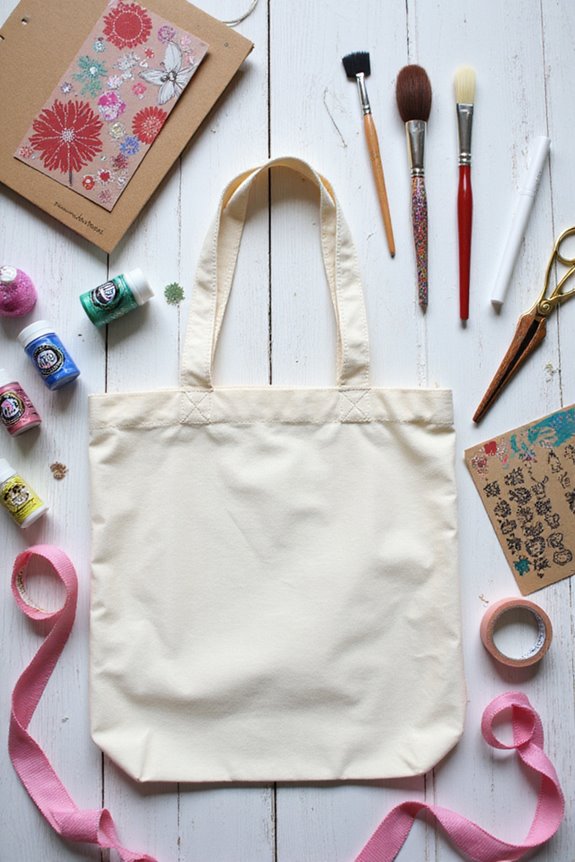
How To Create Personalized Tote Bags

Creating personalized tote bags is easy and fun! First, choose durable fabrics like cotton canvas or jute for style and longevity. Measure and cut your fabric into desired sizes, typically around 14” to 18” for medium to large bags. For personalization, consider techniques like screen printing or fabric painting. Don’t forget sturdy cotton webbing for straps! After construction, add touches like pockets or embellishments. Keep going, and you’ll discover even more tips for your perfect tote! 🎨👜
Key Takeaways
- Choose durable fabrics like cotton canvas or eco-friendly jute for a long-lasting tote bag.
- Select a size that fits your needs, from small (12”) to extra-large (22”).
- Personalize your tote with methods like embroidery, fabric painting, or heat transfer vinyl for unique designs.
- Follow basic construction steps, including cutting fabric, sewing panels, and creating handles for assembly.
- Maintain and store your tote properly to extend its lifespan and keep it looking fresh.
Selecting the Right Fabric for Your Tote Bag
When you’re choosing the right fabric for your tote bag, it’s essential to contemplate your specific needs. Think about fabric durability—heavyweight canvas can carry heavy loads without tearing. 👜 If you’re after breathability, cotton is a great choice for food storage or market trips.
Also, consider fabric aesthetics. Canvas offers a rustic feel with vibrant printing options, while cotton feels softer and more casual. 🌿
Lastly, don’t forget fabric eco-friendliness! Natural fibers like jute are biodegradable and perfect if sustainability’s a concern. Additionally, opting for self-healing mats can enhance your crafting experience by providing a reliable cutting surface.
Here’s a quick summary:
- Canvas: Durable, structured.
- Cotton: Breathable, soft.
- Jute: Eco-friendly, rustic.
Choose wisely, and your tote bag will serve you beautifully!
Determining the Size and Shape for Your Needs

Selecting the right fabric for your tote bag sets the stage for what you’ll carry, but figuring out the size and shape is just as important. Start by considering your preferred uses.
- Small totes (12” x 12”) are perfect for essentials like wallets or phones.
- Medium totes (14” – 16”) balance capacity and portability for daily errands.
- Large totes (18” x 15” or 18” x 18”) handle bulkier items like gym gear or laptops.
- Extra-large totes (up to 22” x 14”) are great for travel but may feel bulky in daily use. Additionally, think about incorporating customizable features that enhance organization based on your specific needs.
Choosing a Personalization Technique

Have you thought about how you want to personalize your tote bag? Choosing the right technique can make a big difference! Here are a few options:
- Screen Printing: Great for vibrant designs, perfect for bulk orders. Just keep in mind—complex designs may get pricey!
- Direct-to-Garment (DTG) Printing: Ideal for intricate patterns, but it’s best for small quantities and feels soft on 100% cotton.
- Embroidery: Gives a professional look for logos, adding durability, but might stretch your personalization budget.
- Heat Transfer Vinyl (HTV): Offers vibrant designs and works well on canvas.
- Fabric Painting & Stenciling: Perfect for DIY enthusiasts, letting you express your creativity, although it may require extra drying time.
Additionally, consider using a sealant spray to enhance the durability of your designs and protect against wear and tear.
Consider both design complexity and budget before deciding!
Recommended Products

Canvas Tote Bags Bulk: This set includes 60 pack 13x15 Inch blank tote bags with multicolor handle ( 6 colors, 10 pack each)—perfect for bulk crafting, DIY personalization, and group activities. The blank canvas design empowers you to unleash your creativity, crafting a tote bag that's truly your own

INCLUDES - 1 roll of Cricut Value Iron-On Heat Transfer Vinyl - 12 in x 5 ft (30.5 cm x 1.5 m)
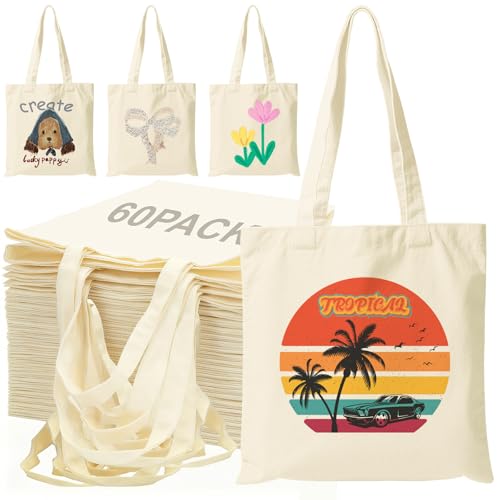
Canvas Tote Bags Bulk: This set includes 60 pack blank tote bags (13x15 Inch)—perfect for bulk crafting, DIY personalization, and group activities. The blank canvas design empowers you to unleash your creativity, crafting a tote bag that's truly your own
Gathering Necessary Materials

Gathering the right materials is essential for crafting a personalized tote bag. Start by sourcing materials like cotton canvas for durability and comfort. Jute offers an eco-friendly, rustic charm, while hemp is a strong option for sustainability. Don’t forget organic cotton, a smooth, hypoallergenic choice!
Here’s a quick list to take into account:
- Cotton webbing tape for sturdy straps
- Fat quarters for neat linings
- Wadding for structure
- Fabric paint or embroidery supplies for personalization
Aim to balance weight and sturdiness to make your tote comfortable and practical. Remember, choosing eco-friendly options not only helps the planet but also adds character to your bag! 🌍✨ Additionally, consider using high-quality bamboo for any crochet elements, as it enhances overall crafting experience. Happy crafting!
Recommended Products
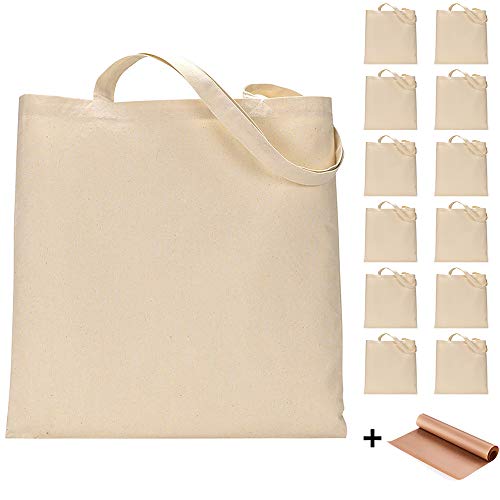
BLANK CANVAS CRAFT BAGS: Do you want to have your own unique bags? Now just show your artistic imagination! Our tote bags are suitable for Heat Transfer Vinyl, Screen Print, Embroidery, Fabric Paints and personalized craft purposes. Come and make it your personalized masterpiece

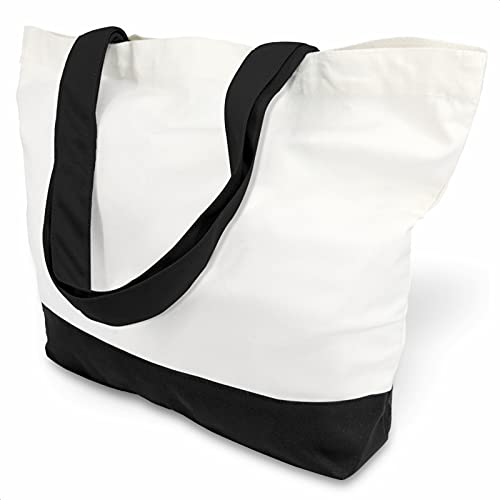
LARGE CAPACITY & DURABILITY: 18.5"L x 4.72"W x 15"H, made of 100% 12oz cotton canvas, the price is about 60% higher than the polyester cotton fabric with same weight in the market. With heavy weight stitching throughout, including cross-stitching at the handles for maximum strength allowing the bag to hold up extra bearing capacity. With two reinforced handles sized 1.4"W x 22.8"L, convenient to carry in hand or wear on your shoulder, sturdy enough for all kinds of daily use.
Basic Construction Steps for Tote Bags

- Fabric Cutting: Measure your fabric for the desired tote size, including seam allowances. Cut two main pieces for front and back panels. Don’t forget to notch the bottom corners for boxed depth!
- Sewing Main Bag Panels: Place the fabric right sides together, and sew side seams using a ½ inch seam allowance. Create depth by sewing across the bottom corners and trim excess fabric.
- Creating the Lining: Cut lining pieces slightly smaller than the outer fabric and sew them together similarly.
- Making Handles: Fold and press handle fabric, then attach it securely to the bag top. Consider using tools from a beginner-friendly kit to enhance your crafting experience.
You’ve laid the foundation for your beautiful tote!
Techniques for Embroidery Personalization
When it comes to making your tote bag truly one-of-a-kind, mastering embroidery personalization is key! Here are some techniques to help you shine.
- Preparation: Use embroidery hoops to keep your fabric taut, making stitching easier. Choose the right needle based on fabric weight—larger for canvas!
- Design Placement: Measure and mark where you want your design, ensuring it’s centered. Printable dissolvable stabilizer paper can help transfer your pattern accurately.
- Embroidery Techniques: Start with outlining stitches, then fill in with satin stitches for texture. Work on sections if your design doesn’t fit the hoop.
- Post-Embroidery Care: Rinse out stabilizers after stitching, and trim any threads carefully.
These steps will greatly elevate your tote bag’s personalization! 🎨✨
Recommended Products

★ PRINTABLE & SELF-ADHESIVE: Sticky Water Soluble Paper Stabilizer is a printable temporary self-adhesive, fabric-like stabilizer which features a strong adhesive on one side that easily sticks to the back of the fabric and prevent any shifting or sliding of the fabric during the embroidery process.

FURSAFE & GENTLE MATERIAL-Made of 100% pure natural material, non-toxic, acid-free and lead-free. It is gentle on skin and causes no itching or irritation, even when used on close-fitting and skin-touch garmentsWEY8Pcs8.5"x11"Stabilizer

Strong Adhesion for Precision Stitching: The MARCADORUS stick and stitch water-soluble stabilizer has a robust adhesive backing that secures fabrics, preventing shifting during stick and stitch embroidery designs. Designed for stick and stitch embroidery paper wash away use, it dissolves completely, simplifying cleanup. With stick n stitch convenience, it ensures accurate and efficient embroidery stick and stitch projects.
Understanding Screen Printing and DTG Printing
Understanding how screen printing and direct-to-garment (DTG) printing work can really enhance your tote bag personalization experience.
With screen printing, vibrant colors are pushed through a mesh screen onto the fabric. This method is great for simple designs and large orders, making it cost-effective. However, it requires preparation and curing, which can be tricky on some materials.
On the other hand, DTG printing uses inkjet technology to print directly onto the fabric. It excels with detailed, multi-color designs and is perfect for small batches or one-off projects. Plus, it generates less waste and uses eco-friendly inks.
Choosing the right method depends on your design complexity and order size, so think about your needs carefully! 👜✨
Recommended Products

VIBRANT EASY MIXING COLORS - Includes 6 must-have colors for your next print project. Use as-is or mix them together to create a gamut of custom colors. The set includes 4oz each of our artist-recommended Black, White, Red, Yellow, Blue, and Green inks.

Formulated to produce the highest quality results whether used by the professional or hobbyist

ALL YOU NEED – This screen printing starter kit offers all you need and more, making it perfect for beginners and professionals alike. It includes a 9.8" x 7.4" screen printing frame, a 4" x 3" screen print squeegee, and 3 x 100ml (3.38 fl. oz) screen printing inks.
Adding Decorative and Functional Enhancements
You can also create pockets or custom linings to enhance organization. When you combine these enhancements, your tote bag not only shines aesthetically but is also practical for everyday use. Happy crafting! 🎨
Recommended Products
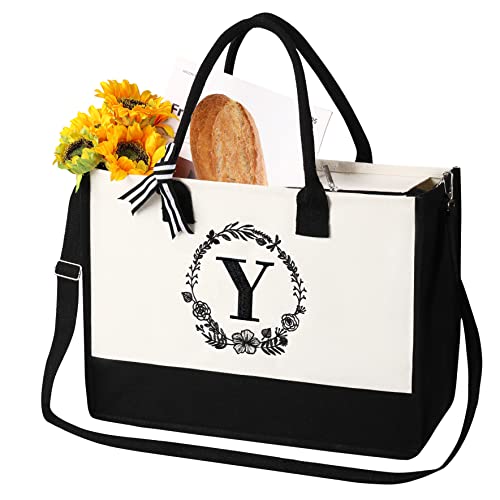

SIZE OF BAG ORGANIZER: Medium: 9.25(L)*5.9(H)*5.1(W) inch Fits Speedy 30 Perfectly. Slender Medium: 11.2(L)*6.5(H)*3.2(W)inch Fits Graceful PM. Large: 11.4(L)*7.1(H) *5.9(W)inch Fits Speedy 35 and Neverfull MM Perfectly. Slender Large: 13.78(L)*5.9(H)*3.35(W)Fit Graceful MM and Delightful PM Perfectly. X-Large:13.4(L)*7.1(H)*6.7(W)inch fits Speedy 40 and Neverfull GM Perfectly. Portable and Compact Purse Perfectly For any Brand.L*H*W means (Length*Height*Width)

MULTIPLE SIZES AVAILABLE: Find the ideal match for your daily bags with our comprehensive size selection. Small: 8.7"L x 4.5"W x 4.3"H, compatible with small tote bags; Medium: 10.2"L x 4.5"W x 5.9"H, compatible with medium top-handle bags; Large: 11.8"L x 5.5"W x 6.3"H, compatible with large designer totes; Slender Large: 13.78"W x 5.9"H x 3.35"D, tailored for slim-profile shoulder bags and hobo styles; X-Large: 13.4"L x 6.3"W x 7.1"H, fits oversized travel totes and weekender bags. Please measure the interior of your purse before purchasing.
Conducting Quality Control and Final Touches
To guarantee our personalized tote bags meet the highest standards, it’s crucial to conduct thorough quality control and perform final touches. First, I check all dimensions against our approved specification sheets for consistency. 📝 Next, I inspect the seams for integrity, ensuring no loose threads or skipped stitches. I also test functionality on zippers and straps to ensure smooth operation.
During the final inspection, I verify color and branding elements match our approvals. I focus on defect prevention, looking for flaws like stains or uneven stitching. I document any feedback to improve each batch continuously. By implementing quality assurance checks, I guarantee our bags not only look great but also stand up to the test of time. 🎒✨
Packaging and Preserving Your Tote Bag Design
After ensuring the quality of our personalized tote bags, the next step is to think about packaging and preserving those beautiful designs. 🎨 Here are some effective packaging techniques and storage solutions:
- Store in a cool, dry place to avoid moisture damage.
- Stuff bags with acid-free tissue paper to maintain shape and prevent sagging.
- Use cotton dust bags for breathable protection against dust.
- Avoid plastic bags since they can trap moisture.
- Label storage containers to stay organized.
Make sure to clean tote bags before storage and air dry them thoroughly. 🌬 By following these steps, you’ll keep your tote bags in pristine condition and extend their lifespan! Happy storing! 📦
What Is the Best Fabric for Frequent Washing?
Cleaning your tote bags feels like a cozy ritual. I’d recommend a cotton canvas for its warmth or a polyester blend for durability. Both can handle frequent washing, keeping your bags looking good and lasting longer.
How Do I Choose Eco-Friendly Materials?
When I choose eco-friendly materials, I focus on sustainable sourcing and material durability. I prefer options like hemp or organic cotton, which last longer and minimize environmental impact, ensuring my choices are responsible and effective.
Can I Customize Store-Bought Tote Bags?
Customizing store-bought tote bags feels like adding a personal touch to a blank canvas. I love the variety of tote bag options available, and with a few methods, you can brilliantly express your unique style!
What Are the Best Practices for Caring for My Tote Bag?
For my tote bag maintenance, I always follow cleaning tips like shaking it out daily, wiping it down weekly, and using mild soap when necessary. Regular care keeps my bag looking fresh and prolongs its life.
How Do I Fix Mistakes in Sewing or Printing?
Did you know about 30% of sewers face mistakes? I’ve found that using sewing techniques like resewing or carefully pinning helps correct flaws, while mild scrubbing can fix minor printing errors without damaging fabric.