As an Amazon Associate, we earn from qualifying purchases. Some links on this site are affiliate links at no extra cost to you. Our recommendations are based on thorough research and editorial judgment.

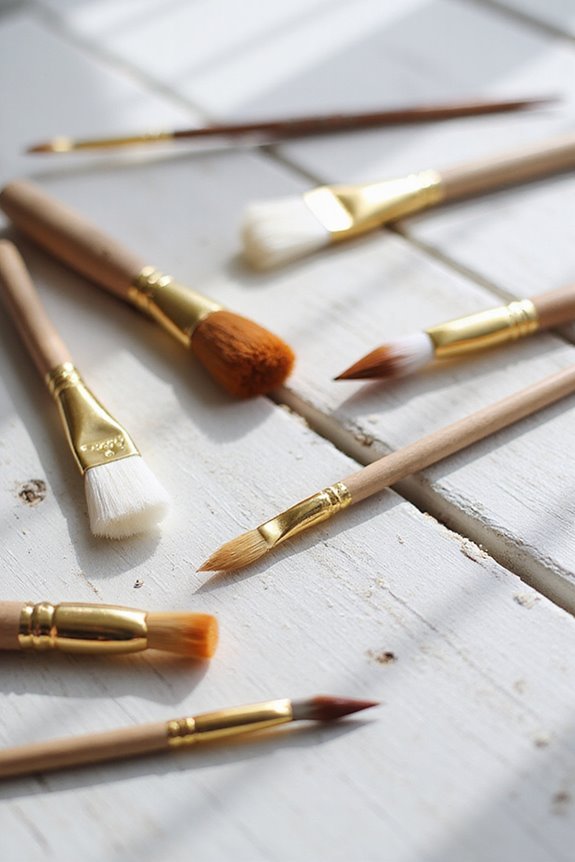
What Are The Best Brushes For Acrylic Painting

When choosing the best brushes for acrylic painting, we recommend selecting from various types like flat, round, and angled brushes. 🎨 Look for synthetic materials, like Taklon, for durability and versatility. Smaller sizes (20/0 to size 5) work great for detail, while larger sizes (size 12 and above) are perfect for bold strokes. 🌟 Regular maintenance is key; rinse brushes quickly and reshape them after use. If you want more tips on techniques and brush care, there’s plenty more to explore!
Key Takeaways
- Choose a variety of brush shapes like flat, round, and angled for versatility in techniques and applications in acrylic painting.
- Opt for synthetic bristles, such as Taklon, for durability and resistance to quick-drying acrylics.
- Consider brush sizes carefully; small brushes for details, medium for blending, and large for bold strokes and covering areas.
- Recommended brands include Princeton, Rosemary & Co, and Winsor & Newton for quality acrylic brushes that enhance performance.
- Maintain brushes by rinsing promptly, cleaning regularly, and storing them handle-down to prolong their lifespan.
Understanding Brush Types for Acrylic Painting
When we immerse ourselves in acrylic painting, understanding the different types of brushes we can use is essential for achieving our desired results. Let’s break it down:
- Acrylic Wash Brushes: These large brushes with soft bristles are perfect for applying thin layers. Their flat shape allows for smooth, broad strokes.
- Angled Brushes: Featuring slanted bristles, they give us control for painting curves and edges, helping us create diverse line thickness.
- Flat Brushes: Their rectangular shape gives us the ability to make bold strokes while filling large areas with paint.
- Round Brushes: The most versatile type, they come in varying sizes for detailed work and filling spaces. Additionally, using high-quality brushes with durable synthetic nylon bristles can enhance your painting experience and ensure longevity.
Recommended Products
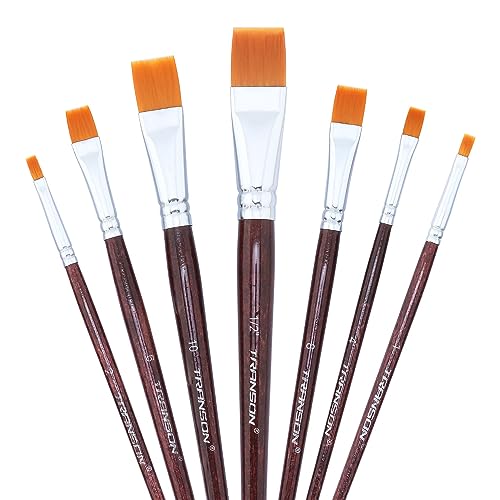
Short-handled(average length:6.7"- 8.1") artist flat paint brush set - Suitable for difference painting medium like gouache, acrylic, watercolor.
Essential Features of Acrylic Brushes
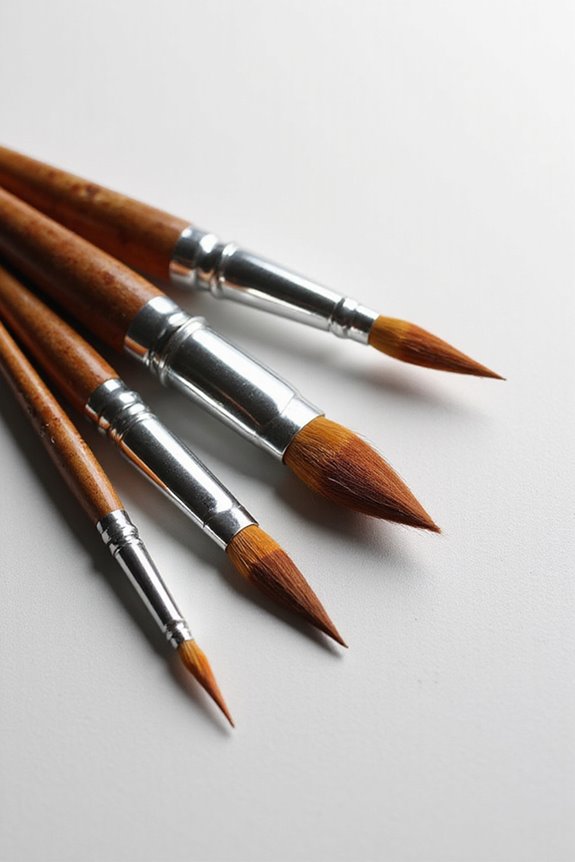
Choosing the right brushes for acrylic painting can greatly impact our artistic results. To guarantee ideal brush performance, we should look for synthetic bristles, like Taklon, known for their bristle durability. These brushes maintain their shape while resisting damage from quick-drying acrylics.
Here are some essential features to take into account:
- Brush shape: Flat brushes cover large areas, while round brushes excel at details. Angled brushes provide versatility for varying line thickness.
- Bristle stiffness: Soft bristles work best for blending soft body acrylics while stiff bristles handle heavy body acrylics effectively.
- Handle design: Short handles suit close work, while long handles are better for easel use. Additionally, using high-flow consistency paints can further enhance the effectiveness of your brushes during acrylic pouring techniques.
Top Brush Brands Recommended for Artists
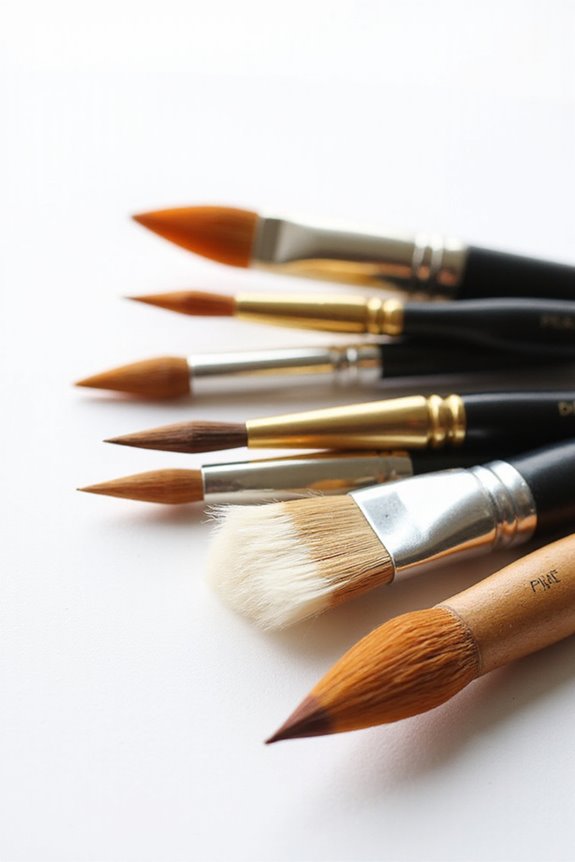
Finding the right brush brand can make a big difference in your acrylic painting journey. Here’s a quick look at some top brands that artists love:
- Princeton Brushes: Their Catalyst Polytip line combines stiffness and softness, making them ideal for control and paint holding.
- Rosemary & Co: Known for cost-effective quality, their Shiraz and Ivory lines provide a great feel for versatility.
- Winsor & Newton: The Monarch series mimics natural hair, perfect for detailed work.
- Liquitex Brushes: Focused on acrylics and durability, their professional series offers excellent brush performance.
- Pro Arte: A mid-range choice, Acrylix brushes offer a balance of firmness and softness for precision.
Additionally, choosing the right brushes can enhance your overall painting technique, similar to how flow properties and application techniques improve the results of acrylic pouring.
Synthetic vs. Natural Bristle Brushes
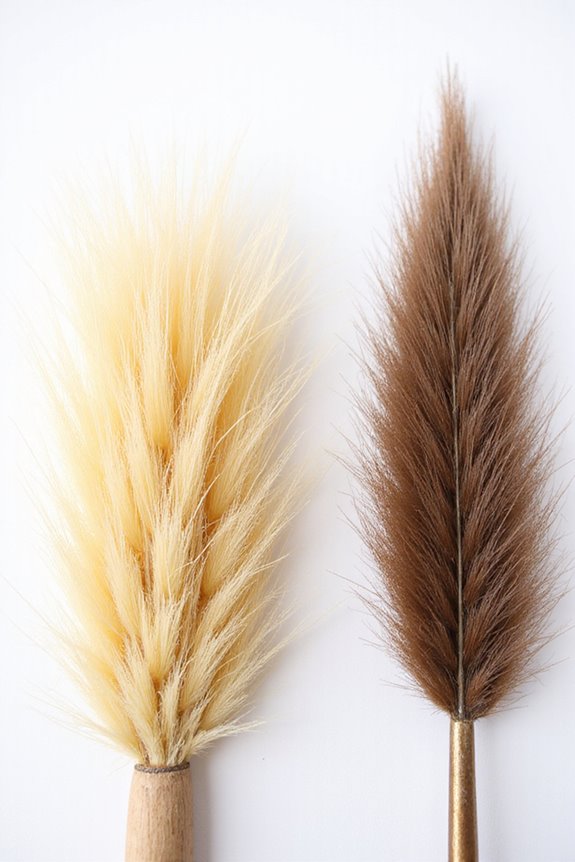
Let’s break it down:
- Natural Bristle Brushes: Made from animal hair, these offer great texture differences. They perform well for blocking in paint but can affect acrylic flow.
- Synthetic Brushes: Constructed from man-made fibers, synthetic brushes excel in brush performance with acrylics. They’re easier to maintain, more resistant to damage, and provide smoother finishes. Additionally, using a glass palette can enhance your mixing experience and improve color accuracy.
For delicate details, natural brushes may shine, but for acrylics, synthetics really hold up. They help us avoid visible brush strokes and offer consistent shapes with every stroke. ✨
Ultimately, we need to evaluate our style and ethics in our choices!
The Importance of Brush Size
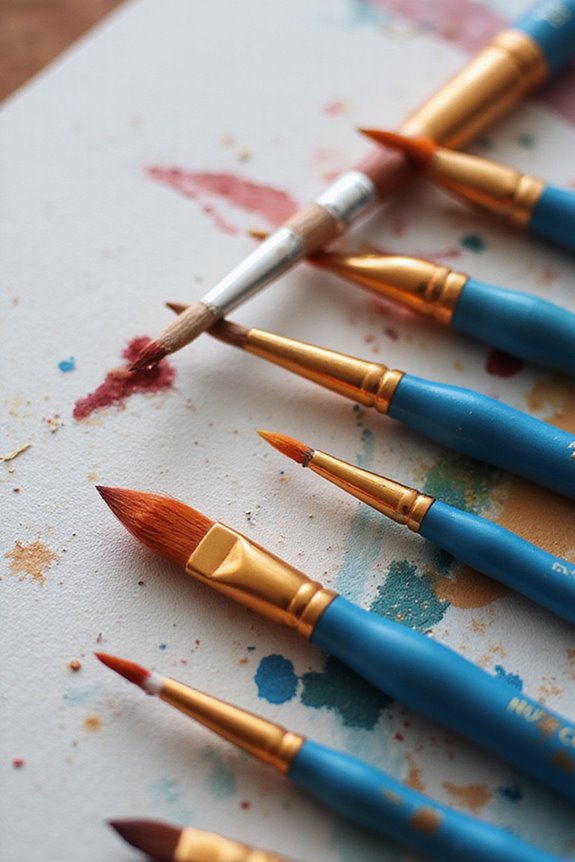
Here’s a quick overview of how brush sizes cater to our various needs:
- Small brushes (20/0 to size 5) are perfect for fine details and miniature work. They allow us to create intricate lines without unwanted thickness.
- Medium brushes (sizes 6 to 10) offer versatility for both detail and blending, making them great for general painting.
- Large brushes (size 12 and above) are designed to cover large areas efficiently, ideal for bold strokes and backgrounds.
Understanding brush size impact is essential when selecting brushes. Each size has its purpose, so by choosing the right one, we can achieve our artistic vision. Additionally, using acrylic paint flow aids can further enhance the application process, allowing for smoother strokes. Let’s be mindful of our project’s needs and select accordingly!
Optimal Brush Shapes for Various Techniques
When it comes to acrylic painting, choosing the right brush shape can greatly enhance our techniques and overall results.
- Round Brushes are perfect for detailing and fine lines, allowing precision in our work. 🖌
- Flat Brushes help us fill large areas with bold strokes and create strong lines, beneficial for blocking in color.
- Filbert Brushes blend colors beautifully, providing soft edges for smooth shifts. 🌈
- Angular Brushes are fantastic for defined outlines and controlling shapes, making them ideal for corners and angles.
- Fan Brushes apply texture effortlessly, whether for foliage or soft backgrounds. 🌿
Recommended Products

The “Goldilocks” Paint Brush Set - Professional-quality performance without luxury pricing. This paint brush set outperforms cheap sets while avoiding the cost and complexity of premium tools. A versatile painting set suitable for beginners and professionals.
Tips for Choosing the Right Acrylic Brushes
Choosing the right acrylic brushes can be a game-changer for any artist. 🤔 With so many options available, it’s essential to evaluate several factors to find the perfect fit for our painting style.
Here are some tips:
- Brush Materials: We should choose synthetic bristles like nylon or polyester for durability and cleanliness. Synthetic sable is great for smooth coverage and details. Avoid natural bristles if you want longevity.
- Handle Ergonomics: Look for brushes with ergonomic handles. Longer handles help with easel work, while short ones give us better control for details.
- Size Selection: Choose size based on your canvas. Larger brushes are perfect for backgrounds, while smaller ones excel in fine details.
Grabbing the right brushes can elevate our painting experience! 😊
Maintaining and Caring for Your Brushes
Caring for our brushes is essential if we want them to last and perform well. 🖌 To start, we should always rinse our brushes promptly after using them, as acrylic paint can dry quickly and damage the bristles. Regular cleaning every time we paint guarantees longer brush longevity.
- Swirl brushes in water to clear out paint, avoiding hand washing that can harm bristles.
- For deeper cleaning, use brush soaps that condition bristles.
After rinsing, gently reshape the bristles and let brushes dry horizontally, never upright. This prevents water from settling and damaging glue.
Lastly, store brushes handle-down in containers to maintain their shape. By following these steps, we can greatly improve our brushes’ cleaning frequency and overall lifespan!
Can I Use Oil Brushes for Acrylic Painting?
We can use oil brushes for acrylic painting, but it’s not ideal. Their acrylic compatibility is poor, and frequent cleaning’s required to maintain them. We’d recommend sticking to brushes specifically designed for acrylics instead.
How Do I Clean Acrylic Paint From Brushes?
Picture a painter’s palette, vibrant yet tangled with color. We’ll master cleaning techniques for acrylic paint—rinsing brushes right after use, utilizing mild soap guarantees brush maintenance, keeping our tools as fresh as our creativity.
What Is the Best Way to Store Acrylic Brushes?
For ideal brush storage and care, we should store acrylic brushes flat or bristle-end up, ensuring they’re completely dry. This protects their shape, prevents mildew, and keeps our artistry tools in top condition for future use.
Do Acrylic Brushes Need to Be Soaked Before Use?
We don’t need to soak acrylic brushes before use. Instead, we can focus on simple brush preparation, like rinsing briefly to remove residues. This way, we maintain their stiffness and performance for our painting.
How Often Should I Replace My Acrylic Brushes?
How often do we really consider our brush maintenance? We should replace our acrylic brushes regularly, as their lifespan shortens quickly with wear. Paying attention to their condition guarantees our artwork remains smooth and enjoyable.