As an Amazon Associate, we earn from qualifying purchases. Some links on this site are affiliate links at no extra cost to you. Our recommendations are based on thorough research and editorial judgment.

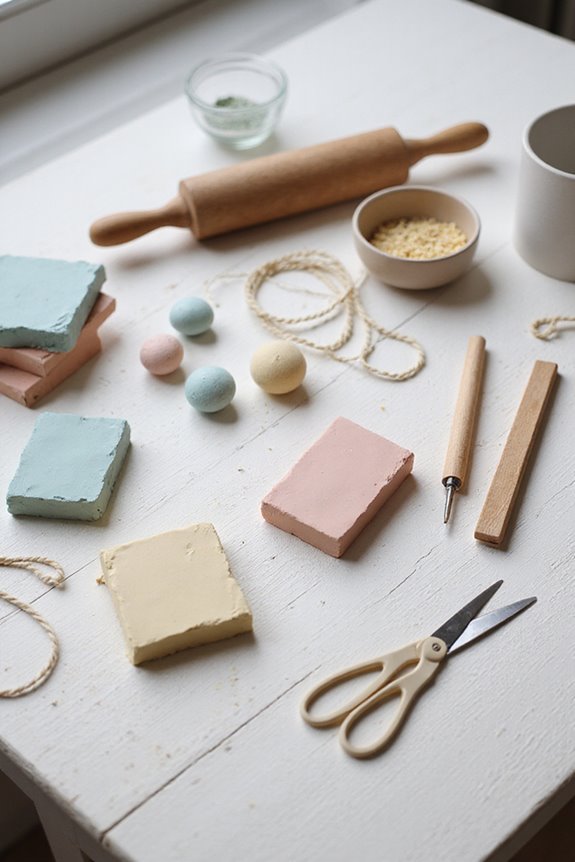
How To Make Handmade Clay Beads

To make handmade clay beads, we’ll need air-dry or polymer clay, tools, and a clean workspace. Start by rolling small pieces into spheres or using cookie cutters for shapes. Remember to create holes with toothpicks before baking! Preheat your oven to 200-250°F, bake for 10 minutes to an hour, and let cool completely. For a polished finish, sand the beads and apply a clear coat for protection. Stick with us; we’ll explore more crafting tips! 🎨✨
Key Takeaways
- Gather materials like air-dry or polymer clay, rolling pins, and tools for shaping and piercing holes.
- Shape beads using hand-rolling, cookie cutters, or molds for different designs and textures.
- Create holes in beads using toothpicks or needle tools, ensuring accuracy in placement before baking.
- Bake beads at 200-250°F for the appropriate time based on size, then cool gradually to enhance durability.
- Finish beads by sanding for smoothness, buffing for shine, and applying a sealant for protection if desired.
Materials and Preparation
When we’re diving into making handmade clay beads, we’ll need to gather a few essential materials first. Let’s consider different clay types like air-dry clay, which is beginner-friendly and doesn’t need baking, or polymer clay, which hardens in the oven for durable beads.
For our workspace setup, it’s crucial to use a clean, flat surface, like a silicone mat, so our clay doesn’t stick. We need tools too, such as rolling pins for flattening and skewers for making bead holes. Additionally, using non-toxic air-dry clay ensures a safe crafting experience as we create our beads.
Don’t forget to cover any unused clay with cling film to keep it fresh! By preparing our workspace and materials, we’re setting ourselves up for a successful crafting session. Let’s enjoy every step!
Recommended Products

Package includes:13 double-ending tools in different shapes:umbrella,petal,spherical,bone,shovel,leaf,comb,cone,shell; 4 plastic stylus;2 scrapers.


Shaping Techniques
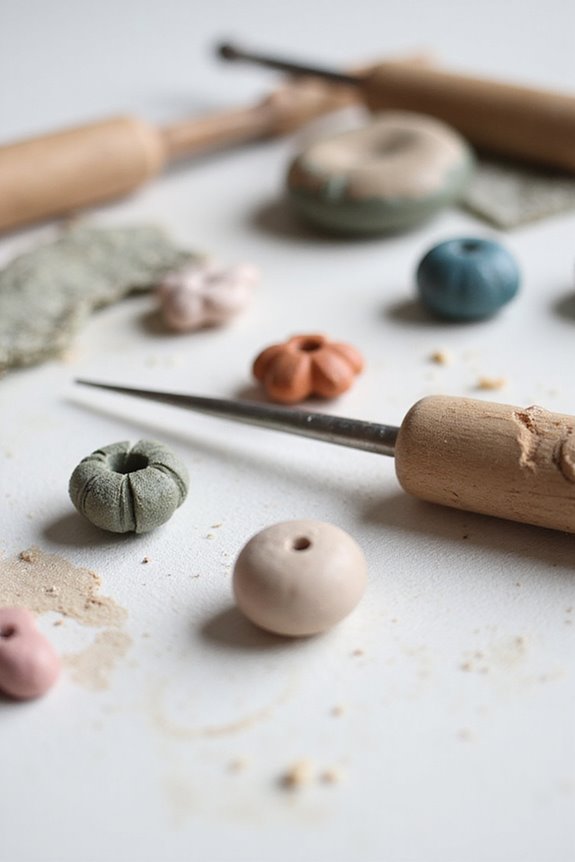
With all our materials and workspace prepped, it’s time to explore various shaping techniques for our handmade clay beads.
- Hand-Rolling: We can pinch small clay pieces and roll them in our palms to create smooth spheres or ovals. Start with firm pressure, then lighten it for a refined shape. For color blending, twist thin snakes together before rolling for marbled effects.
- Rolling and Cutting: Roll conditioned clay flat, then use cookie cutters for uniform shapes.
- Texture Variations: Impress textures from leaves or fabric onto our beads before baking for added interest.
- Tools: Use molds for precision and tools to define curves or grooves.
Experimenting with these techniques will lead to unique and beautiful beads! Additionally, ensuring that the clay is non-toxic and allergen-free is essential for safe crafting, especially for children.
Recommended Products

Piercing Clay Tool for Roller: Helps you easily pierce holes in polymer clay beads. This tool has 6, 8, 10, 12, 14 mm Round Beads. Can great work with polymer clay bead roller.

The Polymer Clay Bead Baking Rack is made from aluminum with a stable base, heats quickly and evenly and disburses heat quickly when you are done, is lightweight for moving from your studio table to the oven and back
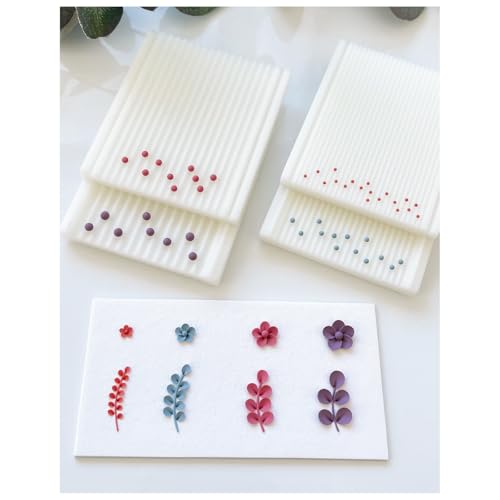
Multiple Sizes: This set includes two polymer clay bead makers. When assembled correctly, they allow you to create polymer clay beads in four sizes: 1mm, 1.5mm, 2mm, and 2.5mm.
Creating Holes in Beads
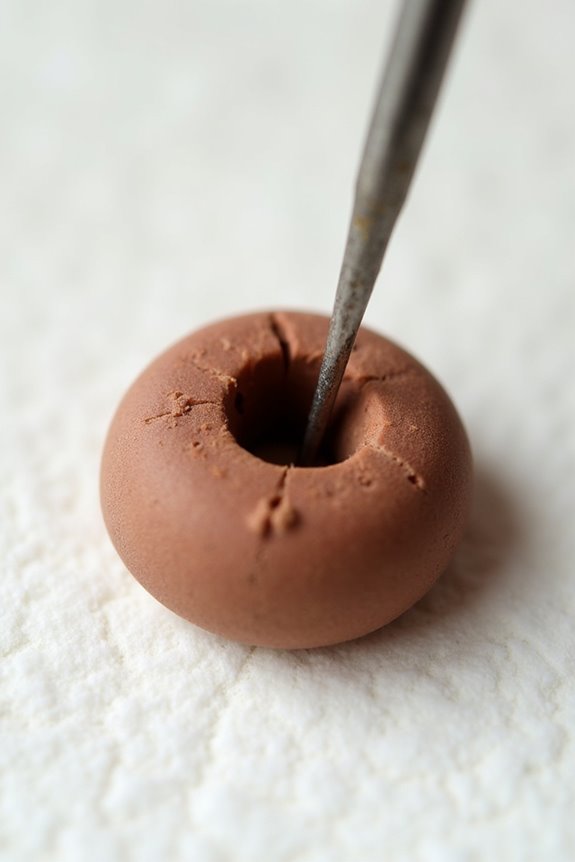
Creating holes in our clay beads is essential for stringing and designing our jewelry. 🌟 There are several techniques we can use, and we recommend trying out a few to see what works best for you.
- Tools: Toothpicks, bead pins, or needle tools are excellent for piercing holes.
- Piercing Techniques: Beads should cool before piercing to avoid distortion. We can twist the needle gently to create a straight hole.
- Mind Your Placement: Marking beads before piercing helps with accuracy.
For added precision, consider using a homemade piercing device. Remember, using properly coated tools helps reduce friction, making the process smoother. 🛠 After baking, we can enlarge holes carefully with fine drill bits, ensuring minimal cracking. Additionally, ensuring the proper thickness for strength is crucial for jewelry pieces to maintain durability during wear.
Recommended Products

DURABLE AND PRECISE --- Unleash your creative potential with our superior Pin Vise, your ultimate partner in crafting. Pin vise also known as mini manual hand drill for jewelry making, resin jewelry drill, small craft drill, bead drill, pin vice set.

Precision Side-Hole Drilling for Unique Earrings:Unlock professional results in polymer clay jewelry making.This specialized polymer clay tool is engineered for drilling perfect side holes in earrings and studs of any shape.Elevate your creations with flawless precision,making it the essential and superior choice for both hobbyists and professional jewelry makers

SIGNIFICANTLY ENHANCED SHARPNESS. We have improved the sharpness IN RESPONSE TO MARKET CONDITIONS. All units purchased after April 1, 2026 are the upgraded version, which features significantly enhanced sharpness.
Baking Process
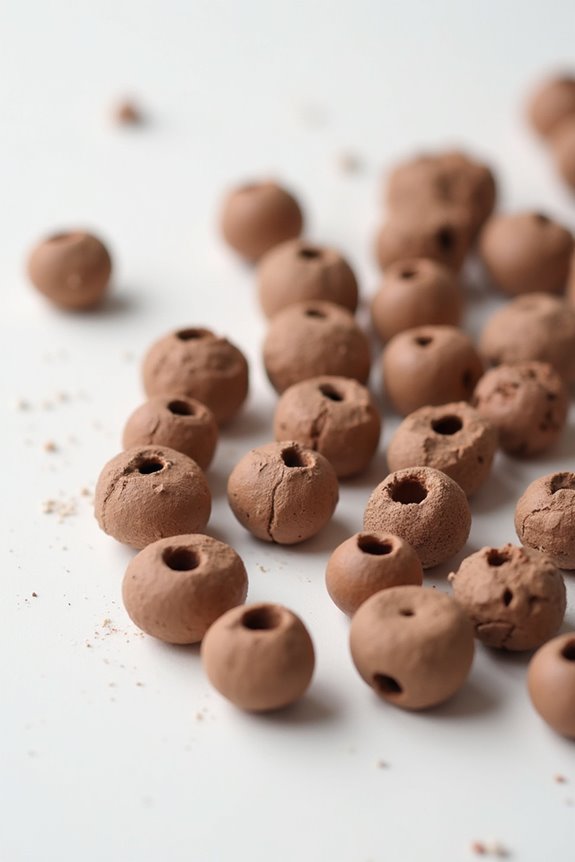
To start baking our clay beads, we need to preheat our oven to the ideal baking temperature, usually between 200-250°F (93-121°C). For consistent results, we’re going to use knitting needles or skewers to suspend the beads, preventing them from touching surfaces.
Let’s bake them for about 10 minutes to 1 hour, depending on size and brand, ensuring longer bake times increase their hardness. After baking, it’s essential to allow them to cool gradually. We’ll set them on a baking rack and wait several hours, letting them cool completely to avoid warping. Remember, proper cooling techniques enhance durability! 🌡✨ Additionally, using non-toxic options is crucial for safe crafting, especially when making items like beads that may come into contact with skin.
Recommended Products

STAYS SOFT UNTIL BAKED: Does not air dry. Remains soft and flexible until it is baked in your home oven - No kiln needed. Store extra clay to use later.

STACKABLE DESIGN – Bake Tall Items or Expand Capacity:For tall pendants or beads: Stack 2+ layers (additional layers sold separately) to increase vertical space – keep clay off the bottom, no sticking or deformation.For large batches: Not enough space in one layer? Just add more layers to bake more beads at once. Maximize your oven space and batch bake dozens of strands

Safe Work Mat, Polymer Clay Bake Tool, Oven Liners, DIY Crafts Projects
Finishing and Touch-ups
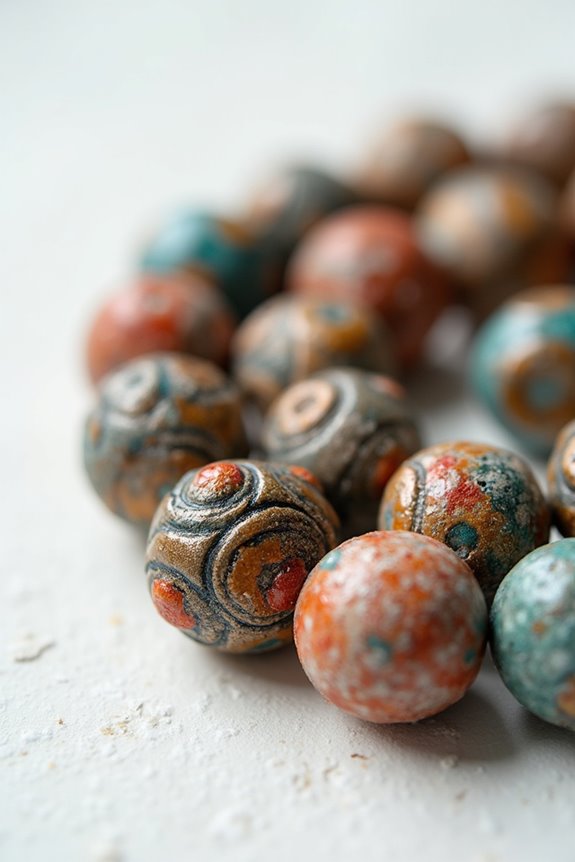
Before we plunge into the finishing touches, it’s important to guarantee our beads are completely cooled. 🧊 Once they’re ready, we can start sanding and smoothing them for a polished look. We’ll begin with 400-grit sandpaper, focusing on any fingerprints, blemishes, and uneven surfaces. Using various sanding techniques, we’ll progress to finer grits for that ultimate smooth finish.
For polishing methods, buffing our beads can lend a silky or glossy finish. Wax polishing works too, especially for intricate shapes. Remember to confirm our beads are blemish-free before waxing—polish enhances flaws. Finally, if desired, we can seal with a clear coat for added protection. High-quality stainless steel tools can also make the initial shaping of your beads easier and more precise. Let’s get those beads shining like they deserve!
Recommended Products

Different Shapes and Size, Meet More Need : 114 Pieces polishing buffing wheel fits different polishing working project. They are not fragile and will help you get your polishing job done quickly. The 1/8 Inch shank fits for Dremel tools and generic rotary tools
Can I Mix Different Brands of Polymer Clay?
Absolutely, we can mix different brands of polymer clay! Their compatibility allows us to blend unique properties, despite brand differences. Let’s experiment with combinations to discover new textures and colors for our projects!
How Do I Remove Dust From the Beads?
So, we’ve got our noble beads cloaked in dust, right? Fear not! With our arsenal of cleaning techniques—vacuuming, gentle brushing, and so on—we’ll whisk away that pesky dust like magical bead cleaners!
Are There Alternative Baking Methods for Polymer Clay?
Yes, we can explore alternative baking methods for polymer clay! Microwave baking and air drying are great options. Microwave baking offers a quick cure, while air drying lets us avoid heat altogether for our creations.
Can I Paint Beads After Baking?
Like a canvas awaiting color, we can certainly paint our beads after baking! Using various painting techniques and potentially bead sealing afterward enhances their durability and beauty, giving each piece a unique and vibrant finish.
How Do I Store Unfinished Clay Projects?
When storing unfinished projects, we should use the best storage methods like damp cloths and airtight containers. These unfinished project tips help maintain moisture, ensuring our creative endeavors remain workable for as long as needed.